Choose a design language—not a collection of trends.
A strong home repeats a small set of proportions, materials and details from the street to the interior. The style name is only a starting point.
Common high-end design directions
Modern
Clear geometry, fewer materials, large openings and precise detailing.
ExteriorFlat or simple roof forms, restrained windows, smooth stucco, stone or wood.
InteriorFlush cabinetry, minimal trim, integrated lighting and quiet transitions.
Warm modern
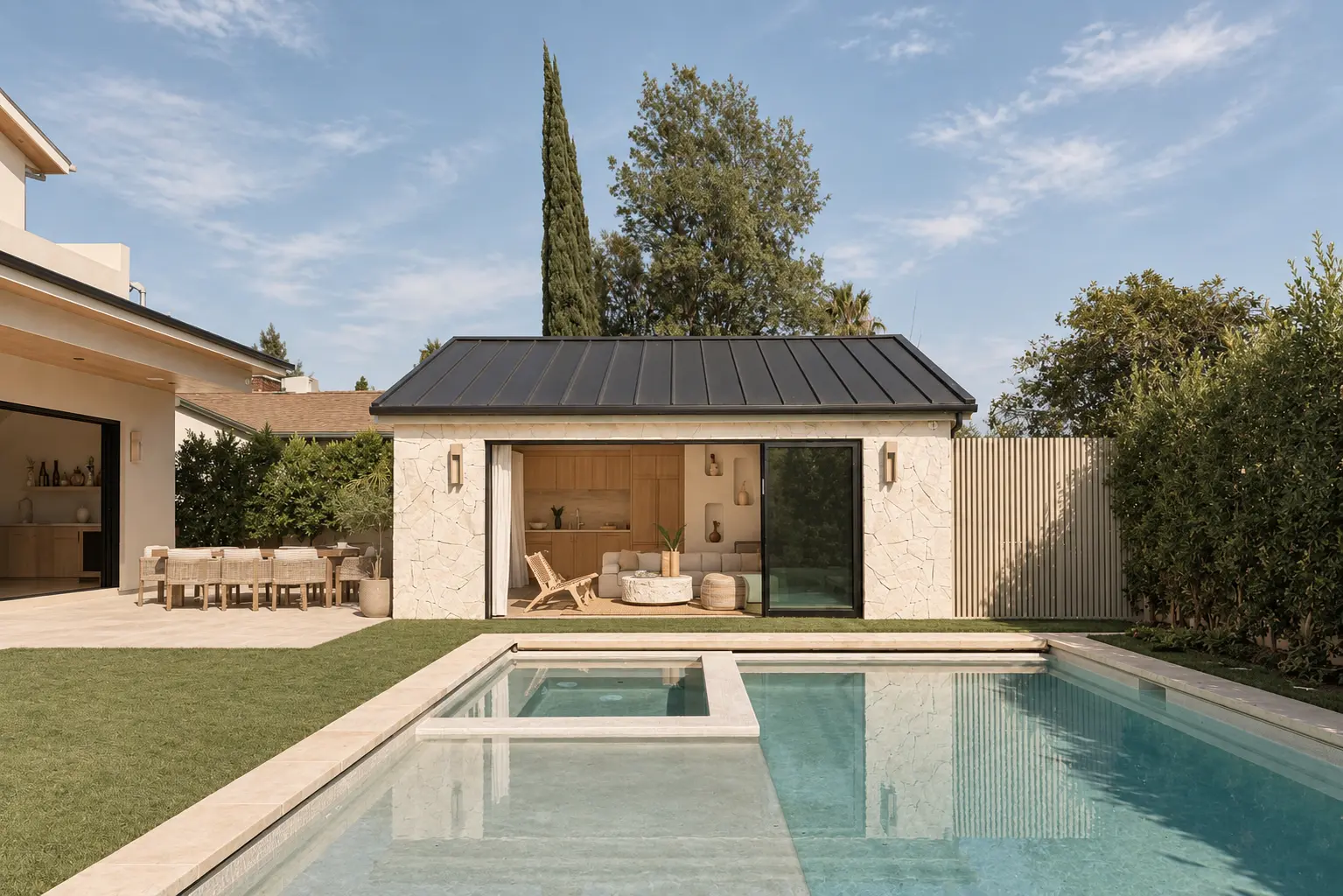
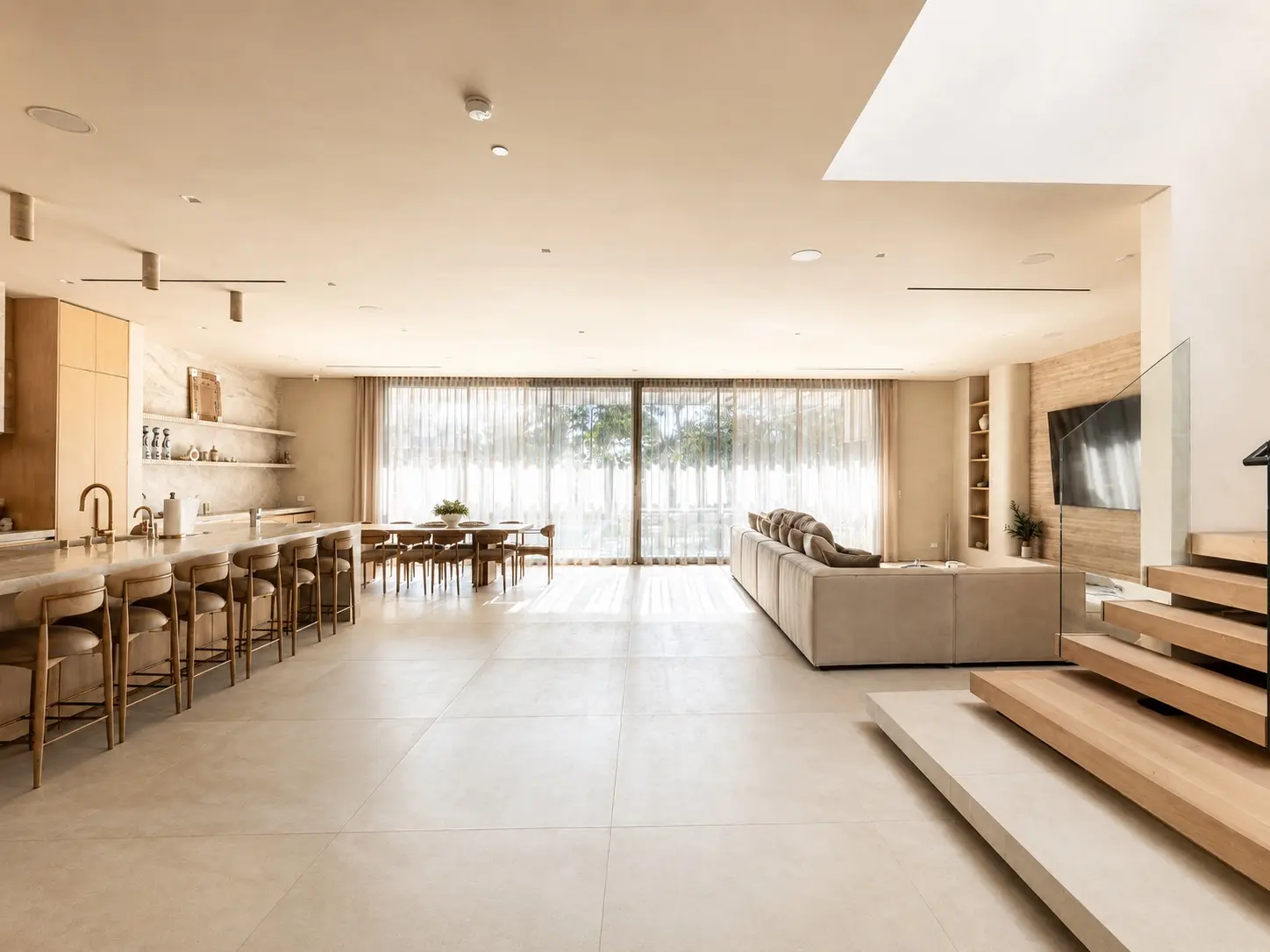
Modern structure softened with warmer wood, textured stone and layered light.
ExteriorSimple massing with natural materials and landscape integration.
InteriorWhite oak, warm plaster, honed stone, soft fabrics and fewer black accents.
Organic modern
Simple forms with tactile, imperfect and nature-led materials.
ExteriorEarth-colored plaster, stone, wood and softer landscape edges.
InteriorCurves, plaster looks, natural stone and sculptural furniture.
Contemporary
Design of the current moment; it can blend several modern influences.
ExteriorMixed volumes, glass, metal, wood or stone based on site and concept.
InteriorClean lines with current colors, lighting and technology.
Modern farmhouse
Farmhouse roof language simplified with cleaner details.
ExteriorGables, vertical siding or stucco, defined entry and practical porch forms.
InteriorSimplified cabinetry, warm wood and restrained traditional references.
Transitional
Traditional proportion with cleaner contemporary finishes.
ExteriorBalanced windows and familiar roof forms without excessive ornament.
InteriorPanel details, tailored trim, natural stone and updated fixtures.
Modern Mediterranean
Arches, plaster and stone interpreted with less ornament.
ExteriorStucco, tile or metal roof accents, courtyards and deep openings.
InteriorPlaster walls, arches, warm stone, oak and aged metal.
How do you know which style fits?
- Save 15–20 images without labeling the style.
- Find repeated features: roof, window shape, wood tone, stone, arches, trim and lighting.
- Remove images that depend on furniture alone; focus on architecture.
- Choose three principles to keep and three things to avoid.
- Test the palette on exterior and interior elevations before ordering.
Seven rules for a high-end result
- Proportion before decoration: ceiling, openings and cabinetry matter more than expensive accessories.
- One hierarchy: every room needs a primary focal point.
- Repeat with variation: carry two or three materials through the home.
- Align lines: doors, windows, cabinet tops, stone joints and lighting should coordinate.
- Control undertones: review whites, wood, stone and metal together.
- Design transitions: thresholds, corners, baseboards and floor joints show quality.
- Light the materials: daylight, color temperature and dimming change every finish.
How do interior and exterior connect?
Repeat a limited material or color relationship, align major openings with interior views and let landscape complete the architecture. A modern exterior can support a warmer interior, but window proportions, door language and details should still feel related.
What should the designer deliver?
- Concept imagery with written principles.
- Dimensioned floor plans and key interior elevations.
- Exterior elevations and material locations.
- Cabinet, stone, tile and lighting coordination.
- Door, plumbing, appliance and finish schedules.
- Full-size samples and mockups for high-impact details.
Turn the design language into buildable details
DG Builders coordinates the design team, specifications, trades and field execution so the finished home keeps the original idea intact.
Discuss your home